- Free Shipping
- Shopping Cart 0 Items ($0.00)

Find The Right Solution
Talk to an expert now!
1-888-686-05511-888-686-0551

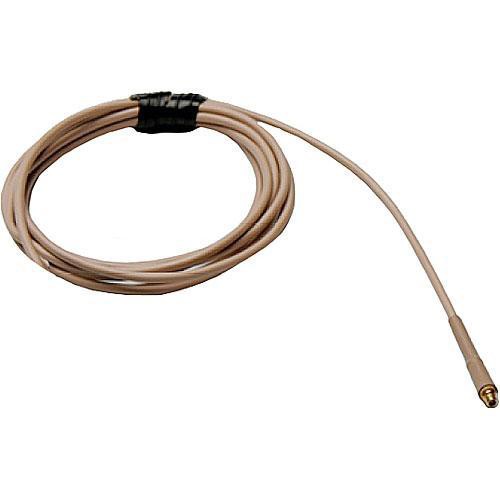

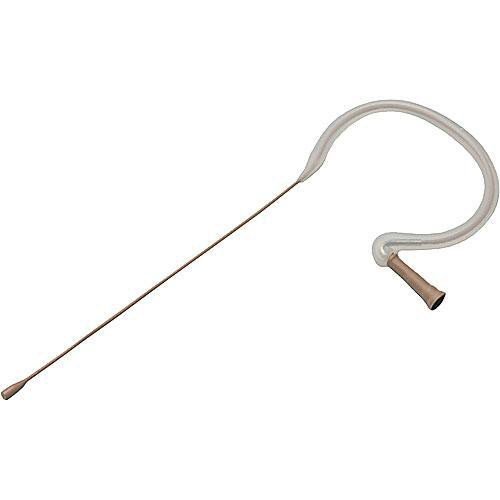
Countryman E6i Directional Earset

This item qualifies for FREE GROUND SHIPPING! Contiguous U.S. only.
Description
Please Note: Not all variations may be available to ship immediately. If you have an urgent need, please contact sales at 1-888-686-0551 or email sales@focusedtechnology.com with the model(s) and quantity you need.
Countryman Associates E6i Directional Earset
Offering the same value, comfort, and sound quality of our popular E6i Omni, our E6i Directional Earset is designed for even more gain before feedback in noisy spaces or near loudspeakers.
Our E6i Earset mics are practically invisible to live or broadcast audiences. They're incredibly comfortable for the wearer. They capture sources clearly with excellent rejection of ambient noise and feedback. And their unique snap-on cable extends the equipment life many times over. In addition, the snap-on cable makes the same earset compatible with virtually any wireless mic system, simply by switching cables instead of buying an entirely new mic!
We've mounted our tiniest mic capsule on an even tinier boom that is rugged, flexible, and incredibly lightweight. Silicon padding at the earpiece helps keep the boom comfortably in place, even with glasses or other head-worn accessories. We offer the widest range of boom and windscreen colors to match virtually any skin tone. The more-flexible boom on the E6i is very easy to adjust and perfect when one mic is shared among several people.
What's more, the protective caps change in seconds, provide moisture resistance, and allow you to select between hypercardioid (most popular) and cardioid patterns for on-location fexibility.
It's no surprise that Countryman's E6i Directional Earset is a top choice for any spoken word application with excessive background noise or potential for feedback.
The E6i Omni microphone is supplied with a snap-on cable with specified connector, windscreen, set of two protective caps (hypercardioid and cardioid), set of two collar clips (black and white), and carrying case. Frequently Asked Questions:
When should I choose a directional Earset?
Countryman Earsets offer both omni and directional versions, giving the user some exceptional advantages. The omni earset rejects unwanted sound and feedback better than a lavalier almost any way you wear it, so it’s very user-friendly for new and experienced users alike. It’s ideal for anyone working with a PA system covering a room without stage monitors. For situations where there are loud monitors, extreme feedback, or environmental noise, choose the Countryman Directional Earset (marked with a green band). It’s much smaller and less obtrusive compared to anything else on the market. For more information on directional earsets, see your dealer or download a copy from our web site. Or simply call us if you have a question.
What is the difference between the E6 and the E6i?
We recommend the classic E6 when just one person wears the microphone. Because it is stiffer and holds its shape well, it can be adjusted to fit the user’s face, stored away, and quickly unpacked and worn with a minimum of fuss.
The E6i adds a soft, highly-flexible boom and a larger silicone rubber ear piece. When multiple users share a mic, the E6i is a great choice. The soft boom is fantastically durable and the extreme flexibility makes changing users a breeze.
How do I choose the right color for my skin tone?
Tan is the most popular color choice, because it works perfectly for average Caucasian skin tones, as well as olive complexions. Light beige works well in theatrical applications due to its slightly pink undertone, which is also appropriate for extremely fair skin. Cocoa is the ideal choice for African American skin tones ranging from very light to chocolate, and black is appropriate for extremely dark skin, or for situations where you want the mic to be visible. When in doubt, choose the darker option. That’s because a mic that’s too light can resemble a scar or blemish, while a mic that’s slightly darker than the background tends to blend much better and draws less attention.
Which sensitivity should I choose?
Making a microphone more sensitive to catch soft sounds means it will overload sooner for loud sounds. Because sound pressure levels vary between individuals and applications, we provide three sensitivities with three overload or clipping characteristics.
Offering the same value, comfort, and sound quality of our popular E6i Omni, our E6i Directional Earset is designed for even more gain before feedback in noisy spaces or near loudspeakers.
Our E6i Earset mics are practically invisible to live or broadcast audiences. They're incredibly comfortable for the wearer. They capture sources clearly with excellent rejection of ambient noise and feedback. And their unique snap-on cable extends the equipment life many times over. In addition, the snap-on cable makes the same earset compatible with virtually any wireless mic system, simply by switching cables instead of buying an entirely new mic!
We've mounted our tiniest mic capsule on an even tinier boom that is rugged, flexible, and incredibly lightweight. Silicon padding at the earpiece helps keep the boom comfortably in place, even with glasses or other head-worn accessories. We offer the widest range of boom and windscreen colors to match virtually any skin tone. The more-flexible boom on the E6i is very easy to adjust and perfect when one mic is shared among several people.
What's more, the protective caps change in seconds, provide moisture resistance, and allow you to select between hypercardioid (most popular) and cardioid patterns for on-location fexibility.
It's no surprise that Countryman's E6i Directional Earset is a top choice for any spoken word application with excessive background noise or potential for feedback.
The E6i Omni microphone is supplied with a snap-on cable with specified connector, windscreen, set of two protective caps (hypercardioid and cardioid), set of two collar clips (black and white), and carrying case. Frequently Asked Questions:
When should I choose a directional Earset?
Countryman Earsets offer both omni and directional versions, giving the user some exceptional advantages. The omni earset rejects unwanted sound and feedback better than a lavalier almost any way you wear it, so it’s very user-friendly for new and experienced users alike. It’s ideal for anyone working with a PA system covering a room without stage monitors. For situations where there are loud monitors, extreme feedback, or environmental noise, choose the Countryman Directional Earset (marked with a green band). It’s much smaller and less obtrusive compared to anything else on the market. For more information on directional earsets, see your dealer or download a copy from our web site. Or simply call us if you have a question.
What is the difference between the E6 and the E6i?
We recommend the classic E6 when just one person wears the microphone. Because it is stiffer and holds its shape well, it can be adjusted to fit the user’s face, stored away, and quickly unpacked and worn with a minimum of fuss.
The E6i adds a soft, highly-flexible boom and a larger silicone rubber ear piece. When multiple users share a mic, the E6i is a great choice. The soft boom is fantastically durable and the extreme flexibility makes changing users a breeze.
How do I choose the right color for my skin tone?
Tan is the most popular color choice, because it works perfectly for average Caucasian skin tones, as well as olive complexions. Light beige works well in theatrical applications due to its slightly pink undertone, which is also appropriate for extremely fair skin. Cocoa is the ideal choice for African American skin tones ranging from very light to chocolate, and black is appropriate for extremely dark skin, or for situations where you want the mic to be visible. When in doubt, choose the darker option. That’s because a mic that’s too light can resemble a scar or blemish, while a mic that’s slightly darker than the background tends to blend much better and draws less attention.
Which sensitivity should I choose?
Making a microphone more sensitive to catch soft sounds means it will overload sooner for loud sounds. Because sound pressure levels vary between individuals and applications, we provide three sensitivities with three overload or clipping characteristics.
- The most sensitive (W5, no band) is for general speaking, such as presentations or sermons
- The middle sensitivity (W6, blue band) is for vocals and loud speaking, such as in theater
- The most powerful vocals require the least sensitive mic (W7, purple band) with the highest overload sound level
Specifications
Frequency Response : 30 Hz to 15 kHz
Operating Current : 500 μA
Operating Voltage : 1 to 2 Volts
Power Supply Voltage :
+3V with 2.7 kOhm Load
+5V with 6.8 kOhm Load
+9V with 15 kOhm Load
Weight : .07 oz (2 grams)
The E6i Directional Earset is available in three sensitivities:
Model E6iDW5 for general speaking
Sensitivity: 6.0 mV/Pascal
Equivalent Acoustic Noise: 24 dBA SPL
Overload Sound Level: 125 dB SPL
Model E6iDW6 for loud speaking and vocals
Sensitivity: 1.9 mV/Pascal
Equivalent Acoustic Noise: 29 dBA SPL
Overload Sound Level: 135 dB SPL
Model E6iDW7 for powerful vocals
Sensitivity: 0.60 mV/Pascal
Equivalent Acoustic Noise: 39 dBA SPL
Overload Sound Level: 145 dB SPL
Operating Current : 500 μA
Operating Voltage : 1 to 2 Volts
Power Supply Voltage :
+3V with 2.7 kOhm Load
+5V with 6.8 kOhm Load
+9V with 15 kOhm Load
Weight : .07 oz (2 grams)
The E6i Directional Earset is available in three sensitivities:
Model E6iDW5 for general speaking
Sensitivity: 6.0 mV/Pascal
Equivalent Acoustic Noise: 24 dBA SPL
Overload Sound Level: 125 dB SPL
Model E6iDW6 for loud speaking and vocals
Sensitivity: 1.9 mV/Pascal
Equivalent Acoustic Noise: 29 dBA SPL
Overload Sound Level: 135 dB SPL
Model E6iDW7 for powerful vocals
Sensitivity: 0.60 mV/Pascal
Equivalent Acoustic Noise: 39 dBA SPL
Overload Sound Level: 145 dB SPL
| Connector Type Reference Chart | |||
|---|---|---|---|
| Transmitter Brand | Transmitter Model | Connector Type | Code |
| (No Cable/Adaptor) | (No Cable/Adaptor) | (none) | MO |
| AKG | DPT800,DPT700,PT2000,PT40,PT400,PT4000,PT45,PT450,PT4500,PT470,PT60,PT61,PT80,PT81 | TA3F | AK |
| AKG | PT300,PT500,PT51 | B-LOC (locking male) | AG |
| Amplivox | S-1600T,S-1690T | 3.5mm non-locking | AM |
| Anchor Audio | WB-6000,WB-6400,WB-8000 | TA4F | AA |
| Audio 2000's | Audio 2000's: AWX6030M; Sennheiser: SK 100 G1,SK 100 G2,SK 100 G3,SK 100 G4,SK 1093,SK 20,SK 300 G1,SK 300 G2,SK 300 G3, SK 300 G4,SK 500 G1,SK 500 G2,SK 500 G3,SK 500 G4,SK AVX,SK D1,SK-XSW,SL Bodypack DW,XSW-D TX35; Gemini: UHF-6000BP | 3.5mm locking | SR |
| Audio Limited | RMS-2000-mxl,TX2000 | Lemo 6 pin (FFA.2C.306) | AL |
| Audio Technica | AEW-T1000,AEW-T1000a,ATW-T1001,ATW-T35,ATW-T601,ATW-T701,ATW-T75,ESW-T211 | Hirose 4 pin | AN |
| Audio Technica | ATW-3201 | Hirose 4 pin screw-down cH-style | ATCH |
| Audio Technica | ATW-T101 | TA5F | AW |
| Audio Technica | ATW-T1801,ATW-T201,ATW-T210,ATW-T210a,ATW-T27,ATW-T31,ATW-T310,ATW-T310b,ATW-T51 | Hirose 4 pin | AT |
| Audio Technica | ATW-T5201 | Hirose 4 pin screw-down cH-style | ANCH |
| Audix | B60 | TA3F | AB |
| Audix | RAD360-BP | TA3F | AD |
| Azden | 10BT (older),41BT (older) | 3.5mm locking | ZV |
| Azden | 15BT,35BT | 3.5mm non-locking mono | AZ |
| Azden | 31LT,32BT,WLT-PRO,WM22,WM-PRO | 3.5mm non-locking mono | ZP |
| Azden | 41BT (UHF) | Hirose 4 pin (HR10A-7P-4P) | ZU |
| Beyerdynamic | TS 316,TS 400,TS 600 | Lemo 4 pin (Type S) | BT |
| Beyerdynamic | TS-170,TS-170p,TS-190 (VHF),TSP | Lemo 4 pin (Type S) | BS |
| CAD Audio | WX155A | TA4F | CA |
| Carvin | Carvin: UBP1000,UX16-BP,UXBP16; Shure: BLX1,FP1,PG1,SLX1,UC1,ULX1,UR1,UR1M; Trantec: S4.4-BTX,S5.3-BTX,S5.5-BTX; JTS: E-6TB,E-7TB(D),IN264TB,IN64TB,PG-36BG2,PT-850B,PT-850BD,PT900B,PT-920B,PT-920BG,PT-920BGmi,PT-920Bmi,PT-950,PT-950Bmi,RU-850LTB, RU-850TB,RU-988TB,RU-G3TB,UF-10TB,UF-20TB; Beyerdynamic: TG 1000 (gray switch),TG 100B (gray switch) | TA4F | SL |
| Comtek | M-216,M-72 (Switchcraft 851 connector) | Switchcraft 851 | C2 |
| Comtek | M-72 (3.5mm non-locking connector) | 3.5mm non-locking | C3 |
| Electrovoice | BP-300,BPU-2 (RE2 Bodypack),BPU-2Pro (RE2 Pro Bodypack),BPU-2Pro-REF (RE2 Pro Referee Bodypack),BPU-R,CSB-1000,NBPU,NBPU-G,WTU-2,RE3-BPT (RE3 Bodypack) | TA4F | ET |
| Electrovoice | MB2500,MSB | TA4F | EV |
| Fender | Passport | Screw on mini 4 pin | FN |
| Happie Amp | Happie Amp: Happie Amp; Empower Sound: Amazing Amp | 3.5mm locking | HA |
| Hardwired/XLR | Hardwired/XLR | XLR3 Male | none |
| HME | TX550,TX822 | TA4F | HS |
| Lectrosonics | DBa,DCHT (with MCTA6TA5M2),LMa,LMb,LT,PDR,SM,SMa,SMB,SMDa,SMDB,SMQ,SMQa,SMQV,SMV,SMWB,SMDWB,SPDR,UM400a,UM450 | TA5F | SM |
| Lectrosonics | HM,UH200d,UH400,UH400a | A3M | LE |
| Lectrosonics | IM,LM,UM100,UM110,UM190,UM190b,UM195b,UM200,UM200b,UM200c,UM250b,UM250c,UM300b,UM400,UM500 | TA5F | L4 |
| Lectrosonics | M170,M170-BGO,M170-LS,M170-XLR (using 2.5mm jack),M175,M175-LS | Switchcraft 851 | L2 |
| Lectrosonics | M185,M187,UM700 | TA5F | LS |
| Lectrosonics | MM200,MM400,MM400a,MM400b,MM400c | Waterproof 2.5mm | LW |
| Lectrosonics | UH100,UH110,UH190,UH195,UH200,UH200c | A3M | LX |
| Lectrosonics | WM | Waterproof 2.5mm | WM |
| Lectrosonics | Lectrosonics: SSM; Sennheiser: SK 2000 | Lemo 3 pin | S2 |
| Lightspeed | BP-200 | Hirose 4 pin | LH |
| Lightspeed | BP-700,BP-800 | TA4F | LT |
| Line 6 | TBP06 | 1/4in phono right angle | L3 |
| Line 6 | TBP12 | TA4F | L7 |
| Micron | TX 700.xx (negative ground) | Lemo 6 pin | M7 |
| MIPRO | ACT-707T (older),MT-103 (older),MT-303 (older),MT-801 (older),MT-808 (older) | Screw on mini 4 pin | MN |
| MIPRO | MIPRO: ACT-24T,ACT-24TC,ACT-30T,ACT-32T,ACT-32TC,ACT-50T,ACT-52T,ACT-52TC,ACT-58T,ACT-58TC,ACT-707-TS (TE),ACT-70T,ACT-70TC,ACT-7Ta,ACT-801 TS (TE),ACT-80T,ACT-80TC,ACT-8Ta,MT-103a,MT303,MT801,MT-801a,MT808; Beyerdynamic: Opus Series,TG 100 (before 2015),TG 1000 (before 2015),TS 100,TS 300,TS 500,TS 800,TS 900 C,TS 900 M,TS 910 C,TS 910 M; Peavey: PCX-U302-B,PCX-V12-B | Screw on TA4F | MI |
| Nady | UB10,UB16,WLT14,WLT15 | 3.5mm locking | NL |
| Paso | MW223 | TA4F | PA |
| Pigtail Leads | - | Stripped and tinned | NC |
| Revolabs | HD (Countryman Adaptor) | TA4F | RV |
| Sabine | ST50T,SW1600,SW16TX,SW3000,SW30TX | Screw on TA4F | SS |
| Sabine | SW16T,SW30T | Screw on mini 4 pin | SB |
| Sabine | SW70 | TA4F | ST |
| Samson | Airline AL1 | 2.5mm Stereo | AS |
| Samson | AL-300,CT3,CT7,T32,UT1L,UB7,CB99,VT2L,VT3L | TA3F | SV |
| Samson | BT3,CT2,TX4 (gray),UT4 | Hirose 6 pin | SA |
| Samson | TX3 (Black),UT5,UT6 | Hirose 6 pin | SX |
| Senal | AWS-2000T | 3.5mm locking | S4 |
| Sennheiser | BF 1083 | Lemo 1 pin | S1 |
| Sennheiser | SK 2012 | Microdot | SE |
| Sennheiser | SK 2020-D | 3.5mm locking | S6 |
| Shure | AD1,ADX1,AXT100TA4F,GLXD1,PGXD1,QLXD1,ULXD1 | TA4F | AX |
| Shure | MXW1,MXW1/0=-Z11 | TA4F | SW |
| Shure | Shure: AD1LEMO3,ADX1LEMO3,ADX1M,AXT100LEMO3,ULXD1LEMO3,UR1MLEMO3; Audio Limited: A10-TX,A10-TX-US; Sennheiser: SK 250,SK 3063,SK 50,SK 5012,SK 5212,SK 5212-II,SK 6000,SK 9000 | Lemo 3 pin | S3 |
| Sky | UT86P | 3.5mm locking | SD |
| Sony | DWT-B01,DWT-G01,DWT-S01,DWT-V01 | Hirose 4 pin (twist lock) | DS |
| Sony | UTX-B03,UTX-B1,UTX-B2,WRT-805A | 3.5mm locking | SN |
| Sony | WRT-28,WRT-820A,WRT-860A,WRT-8B | Hirose 4 pin (twist lock) | SO |
| Sony | WRT-420,WRT-822B | Hirose 4 pin (twist lock) | SY |
| Sony | ZTX-B01,ZTX-B02RC | 3.5mm locking | SF |
| Telex | LT100,PST16,VB12,WT10,WT1000,WT50,WT500,WT55,WT60,WT700,WT80 | TA4F | TS |
| Telex | WT-200,WT-400,WT-450 | Lemo 4 pin | TL |
| Toa | WM-370,WM-4310,WM-5320,WM-5325 | 3.5mm (Special Toa) | TO |
| Toa | WM-4300 | TA4F | TA |
| Vega | 77677 | Lemo 4 pin | VL |
| Vega | BP2020,PRO-2,ST2020,T23,T25,T37,T93 | TA4F | VS |
| WisyCom | MTP30,MTP40,MTP40S,MTP41,MTP41S | Lemo 3 pin | WY |
| Yamaha | Yamaha: Pocketrak C24,Pocketrak W24; Olympus: DM-420,DM-520,DM-620,DS-2400,DS-40,DS-51,DS-61,DS-71,LS-10,LS-14; Roland: R05 ,R09HR; Zoom: H1,H2,H2n; Sony: PCM-D50,PCM-M10; Tascam: DR-05,DR-07mkII,DR-08,PR-10 | 3.5mm locking | D2 |
| Yamaha | Yamaha: Pocketrak C24,Pocketrak W24; Olympus: DM-420,DM-520,DM-620,DS-2400,DS-40,DS-51,DS-61,DS-71,LS-10,LS-14; Roland: R05 ,R09HR; Zoom: H1,H2,H2n; Sony: PCM-D50,PCM-M10; Tascam: DR-05,DR-07mkII,DR-08,PR-10 | 3.5mm locking | D3 |
| Zaxcom | TRX900AA,TRX900LA,TRX900LT,TRX900LTH,TRX900LTHS,TRX900LTS,TRXFB3,TRXLA2,TRXLA3,TRXLT3,ZMT3 | Lemo 3 pin | ZX |
Reviews
Downloads
Images

Copyright © 2026 FocusedTechnology.com All Rights Reserved.